Faith in Community Dundee facilitated 2 key strands of Fairness Work: Dundee Fighting for Fairness (2019-2026); Dundee Fairness Leadership Panel (2021-2026)
Please see below for more information about the Fairness Leadership Panel and click the button for the latest Fairness Leadership Panel report for 2025
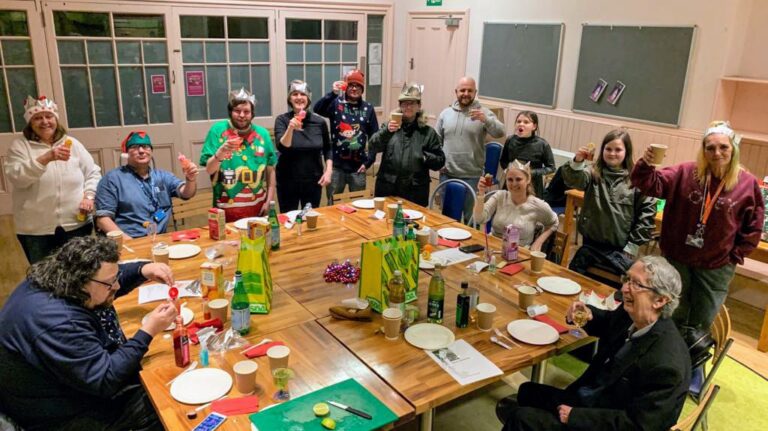
Dundee Fighting for Fairness, or commonly shortened to DFFF, is a small collective of Dundonians with various lived experiences, networks, and influences across our city. They all have different stories to tell, but have 3 things in common:
They are all connected with, listening to, or working for different vulnerable groups in our city.
They are all passionate about challenging unfair policies, procedures, and systems.
They have all experienced some level of poverty and inequality.
They strive to change and influence policies that are unfair to the most vulnerable and marginalised in our city in these ways: Sharing their personal stories and what would have made things better. Proactively speaking to different local community groups and individuals to gain a broader understanding of the issues and topics that the community is struggling with and hearing what solutions would make a difference. Collaborating with statutory partners to encourage them to listen and learn from lived experiences so that our city is a fairer place to live.
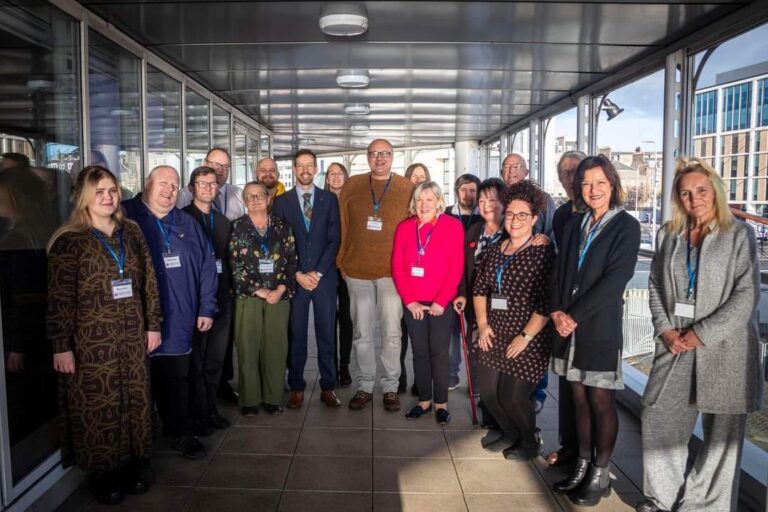
The Fairness Leadership Panel is a collective response to poverty/inequality. A Panel made up of people with lived experience and organisational representatives working together to ensure the disadvantaged and vulnerable in our city have a voice. They work to mitigate the impact of external factors, that are beyond the control of city level leaders, by focussing on where they can bring influence and real change. Panel members are not afraid of asking hard questions. DFFF’s role in the Fairness Leadership Panel is to make sure that the Council & other Service Providers are seeking the advice and guidance of people with lived experience of financial insecurity and other inequalities.
Dundee Fairness Commissions
What is a Fairness Commission?
A Fairness Commission is a unique form of community development and empowerment. A Commission brings together people who have been through financial insecurity and inequality with very senior managers and directors from different areas of society, however, there is no hierarchy and no agenda. These people spend 18 months together, first listening to personal experiences of financial insecurity and the impact it has, then drawing out themes from the stories they hear. Next they do further research in the community and with local services and organisations to get a deeper understanding about how these themes impact Dundee, and finally they form recommendations that challenge the status quo of how services and organisations in Dundee work with people experiencing financial hardships.
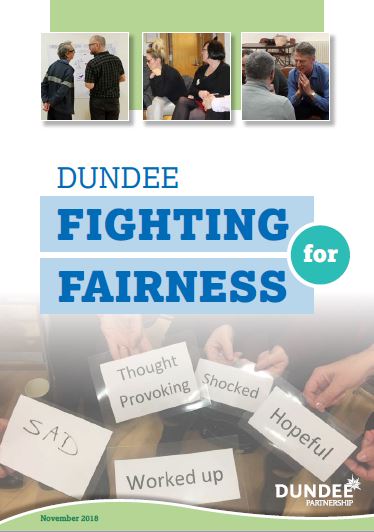
Faith in Community Dundee was commissioned by the Dundee City Council and the Scottish Government to facilitate a Fairness Commission in 2017-2018 and then a second one in 2019-2020 (which was extended into 2021 due to the Covid-19 Pandemic).
2017 - 2018 Commission
This Commission looked into the areas of:
Mental health
Stigma
People and money
Cover of the 2017 - 2018 fairness commission report.
All themes were researched through the lens of financial insecurity and inequality. To read their recommendations around how to make these areas better for people, read their full report here.
2018 - 2019 Commission
This Commission looked into the areas of:
Mental health and wellbeing
Disability
Food and fuel insecurity
Cover of the 2018 - 2019 fairness commission report.
All themes were researched through the lens of financial insecurity and inequality. To read their recommendations around how to make these areas better for people, read their full report here.
Wonder Box
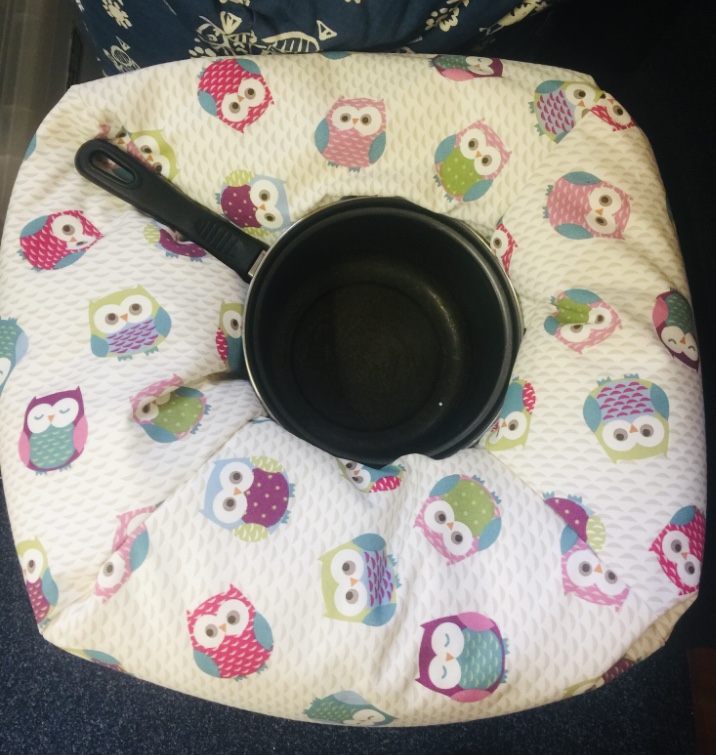
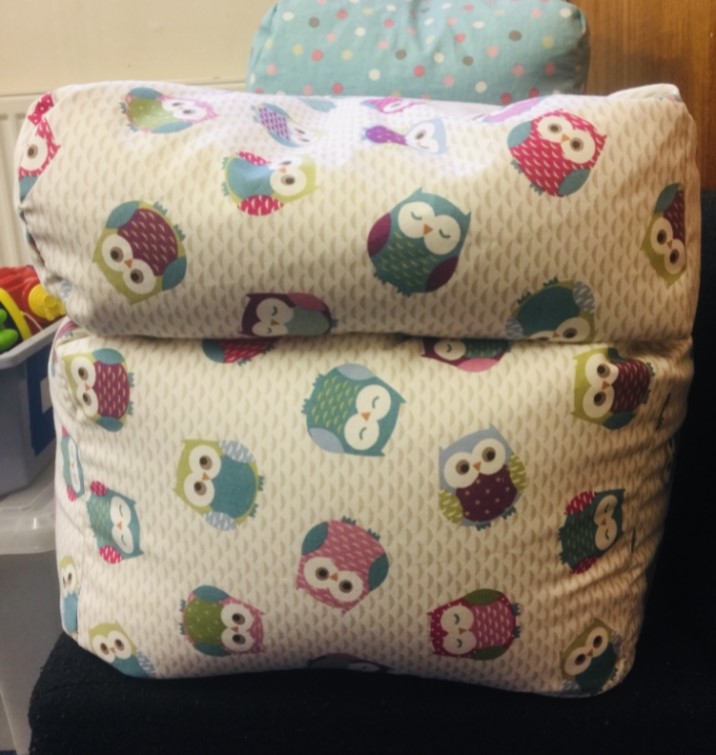
The Wonder Box is essentially a heat retention cooker, and we have worked with many projects city wide to run workshops so people can make their own, as well as learn low cost, healthy recipes.
Heat Retention Cooking
can be used to create healthy, nutritious recipes, whilst saving users money on energy bills.
Follow our handy how-to guide to make your own Wonder Box, and find one-pot recipes, using the button below.
Heat Retention Cooking works by bringing food to the boil in an ordinary pot and then placing the pot into an insulated container. This keeps the heat in and allows the food to cook over a period of time – it might be simplest to think of a heat retention cooker as an unpowered slow cooker. The charity Compassion, working in South Africa in the 1970s was so inspired by these devices they started calling them Wonder Boxes. This method works really well for traditional one-pot style meals such as stews, soups and similar dishes. Using a roasting bag in a pot of boiling water, it is possible to slow-roast food such as joints of meat and vegetables, and HRCs can be used to make yoghurt or to prove bread for baking.
Critically, because it uses no fuel beyond the initial time on the hob, a Wonder Box can save users money. Testing demonstrates that used 2-3 times a week, a Wonder Box can save anywhere between a quarter to a third on a user’s electricity or gas spend. One user consistently saves £5-£6 per week when before they were spending £20 a week on electricity. Wonder Boxes are inherently safe, food won’t stick or burn and there is no risk of fire. Many people experiencing poverty have good cooking skills and know how to make good nutritional choices for their families, but the high cost of fuel coupled with inefficient appliances means they rely on microwaves because this is the fastest and therefore lowest cost route.
We believe that heat retention cookers can challenge fuel poverty, nutritional deficits and improve quality of life for people in Scotland’s poorest communities, while addressing the environmental impact of fossil fuel use.
Click here for a how-to guide to make your own Wonder Box, and if you are a faith community project interested in running a workshop, please contact us for advice. Also, please click here for Wonderbox recipes.
Participatory Budgeting
Participatory Budgeting is a process where projects can apply for a grant, and the public then vote on the projects they want to receive the funding.
Camperdown and Lochee Ministry presenting their idea at a PB Voting Event.
We have worked in partnership with the Scottish Government, Lochee Parish Church, Coldside Church, Douglas & Mid-Craigie Church, Dundee West Church, Balgay Church, Dundee City Council and local community officers to deliver Particpatory Budgeting in Dundee, supporting projects city wide to apply and engaging with the community to enable them to vote.
Over the 4 years that we ran PB;
0
projects were shortlisted
0
projects were funded
£0
was awarded
These projects have used the funding to positively impact their community, including setting up community cafes, cooking groups and local gardening and growing initiatives, supporting vulnerable young people, running activities for older people and developing resources to support people in recovery.
In 2020, despite the restrictions of the pandemic, we supported 13 projects to apply, 6 of which were successfully funded, including 5 faith community projects. Of the £9454 applied for, £9375 was distributed between the 6 winning projects.
The list of winners, and all projects shortlisted in 2020, can be found on the Dundee PB Facebook Page.
In 2021/22 we supported 13 projects to apply, 6 of which were successfully funded, including 2 faith communities. Of the £7,010 applied for, £6,930 was distributed between the 6 winning projects.
The focus was reconnecting adults, giving them opportunities to reconnect after so much time isolated and apart. The projects funded will support a wild walkway for people with dementia and their families; budget cooking classes; activities at a community cafe; an informal language cafe for New Scots; a social group for older women; and home improvements for people on low incomes.
The PB Steering Group after counting 921 votes! Still smiling!
Funeral Poverty
In 2016, after hearing people’s experiences of struggling to pay for funerals, we initiated the Funeral Poverty Action Group, bringing together representatives from the Pensioners Forum, faith communities and individuals with experience. Since its inception this group has enabled the development of a local response – Funeral Link, and is still campaigning for fairer funeral costs for people on lower incomes.
During To Absent Friends week, November 2020, Faith in Community Dundee partnered with Funeral Link to share some thoughts and light our candles together. This small time of reflection can be seen in the video below, and is still relevant for any who have lost a loved one.
Boredom Busters
The Boredom Busters initiative was launched in response to a growing need identified for families to have access to free or low-cost activities to tackle both financial insecurity and the effects of COVID-19, which impacted families financially as well as increasing isolation as children and families could not access community activities. All of the resources can still be used now and are still accessible and downloadable.